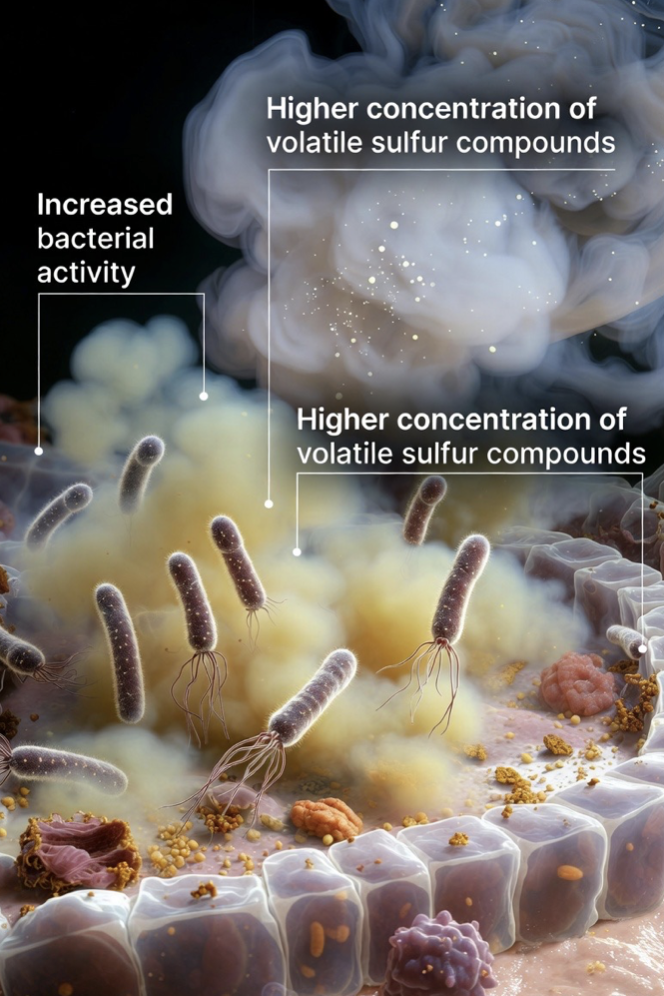
Type 1 : Oral halitosis is also called oral malodor and is commonly termed “bad breath”
From the desk of Bassel Paul Gebrael DDS, Dip. Perio, FRCD(C), FICD
Bad breath affects an estimated 25 to 40% of population and it’s a common concern that affects quality of life, social interactions and psychological well-being. In these posts, I will explain the different types of bad breath and review the treatment options available.
Type 1 : Oral halitosis is also called oral malodor and is commonly termed “bad breath”
This is caused by a bacteria metabolism in your mouth, generating volatile, sulfur compounds, mainly hydrogen sulfide, and methyl mercaptan and dimethyl sulfide.
There are almost 700 different compounds that can cause bad breath other than volatile sulfur and this includes organic compounds like indole and skatole as well as short chain acids like butyric acid and amines.
Most bacteria in your mouth are capable of releasing malodorous compounds under certain conditions.
The specific mouth smell and its intensity at any given moment in time depends on the variations in the microbial composition, as well as the type of nutritional substrate for the bacteria and the kind of bacterial metabolism that’s occurring.
There are specific gum conditions like gum infection, oral bleeding, food being stuck between the teeth, and dental restorations that could contribute to bad breath in some conditions.