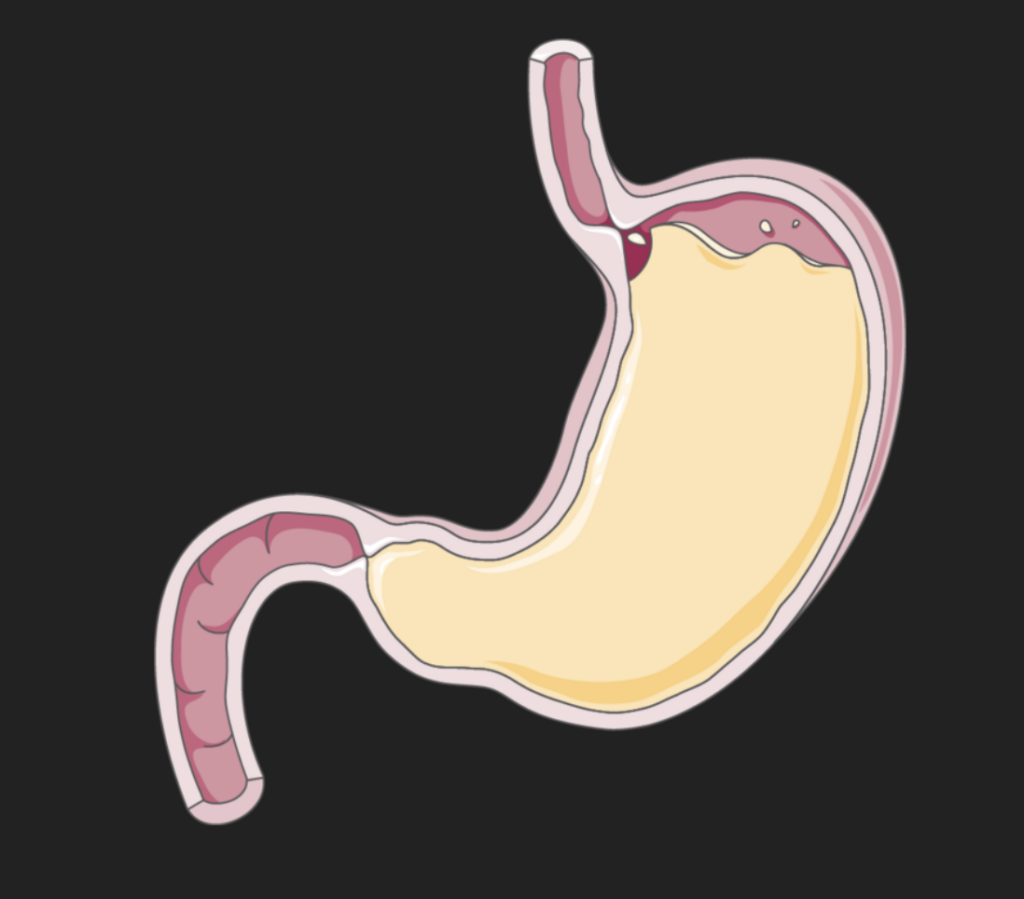
Type 3 Halitosis (Gastroesophageal) based on Aydin 2014). Source of odor is gas leakage from the stomach.
From the desk of Bassel Paul Gebrael DDS, Dip. Perio, FRCD(C), FICD
Type 3 halitosis is caused by the leakage of odorant volatile molecules from the stomach through the esophagus. Gastroesophageal reflux (belching) occurs several times a day and is considered normal. It can produce mild odour as a normal physiological process.
Gastroesophageal halitosis can become pathologic in conditions like GERD, H. pylori-related gastritis, or anatomical causes such as fistulae or diverticulars. Acid reflux can damage taste receptors in the mouth, causing phantom taste and halitosis.
The contribution of GERD to halitosis is uncertain, with GI disorders accounting for up to 5% of complaints. H. pylori infection and erosive GERD are correlated with elevated volatile sulphur compounds (VSCs) in the mouth. H. pylori can synthesize H2S and MM from cysteine-methionine substrates in vitro, and elevated levels of malodorous volatiles have been detected in the breath of H. pylori-infected patients. H. pylori can also colonize the mouth without GERD and directly cause type 1 oral halitosis.
GI disease-related (gastroesophageal) halitosis is relatively rare, but studies support its occurrence.